An alarm can travel across a building in milliseconds. A decision rarely does. This month’s security news raises a more difficult question: what happens in the uncertain moments between somebody noticing a problem and somebody doing something about it?
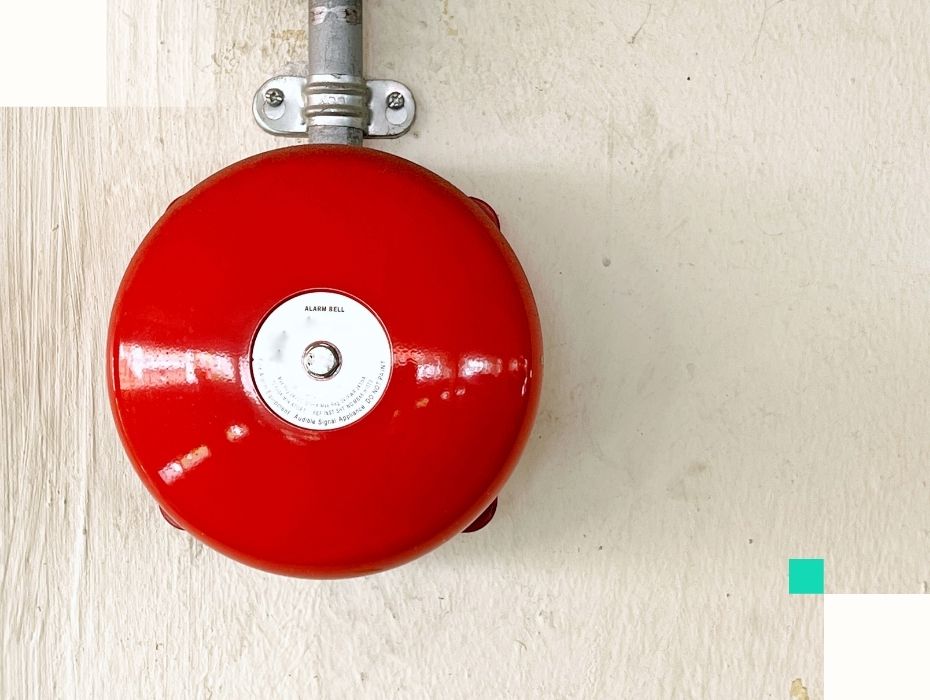
There is a reason fire alarms are loud.
They are not designed to begin a thoughtful discussion about whether the building may, on balance, be slightly more combustible than usual.
They remove ambiguity.
“Something is happening. LEAVE NOW!”
Most security incidents are less direct.
A raised voice in a hospital corridor might be frustration or the beginning of an assault. An employee who has not checked in may be busy, injured or simply ignoring their phone.
The alarm may be immediate. The meaning rarely is.
This matters because the most dangerous delay in security, may be the time it takes everyone to agree that an incident is happening.
The security response clock starts before anyone looks at it
A recent Security Magazine article argues that response time has become one of the most overlooked measures of workplace safety.
Organizations routinely track incident rates, training completion, lost-time injuries and audit results.
Yet these metrics do not necessarily answer a more practical question: how quickly can somebody get help?
The article notes that delays in reporting, locating and responding can increase the severity of an emergency. This is particularly important for employees working alone, out of sight or across large and complex facilities. In these cases, a safety plan is only as strong as the organization’s ability to know something happened, identify where help is needed and act.
That sounds like an argument for speed. It is really an argument about uncertainty.
Between a raised alarm and when help arrives sits an untidy chain of human questions:
Is this serious? Has anybody else seen it? Who is responsible? Should we verify it first? Does security own this, or operations, HR, facilities or management? Where exactly is it happening?
Several minutes go by…

Not every hesitation is a security mistake
Of course, hesitation is not inherently bad.
Security professionals are paid to exercise judgment, not behave like human smoke detectors.
An immediate response to incomplete information can escalate a security incident, send resources to the wrong location or turn an unusual situation into a dangerous one.
Verification matters. Context matters. Proportion matters.
The goal should not be to eliminate thinking. It should be to eliminate avoidable uncertainty.
There is a considerable difference between pausing because the situation requires judgment and pausing because nobody knows the procedure, the location, the escalation route or who is expected to make the decision.
One is professional caution.
The other is organizational friction wearing a sensible hat.
How Kinexio's incident management solutions can help
Incident Management System
Ensure serious events are recorded consistently and in full. Structured, logic-based reporting guides teams to capture the right details at the time, reducing gaps, assumptions, and incomplete records.
Daily Occurence Log
Record patrol completion, observations and notable activity identified during routine security patrols.
When security threats become ordinary
The scale of workplace violence in US healthcare makes the issue particularly urgent.
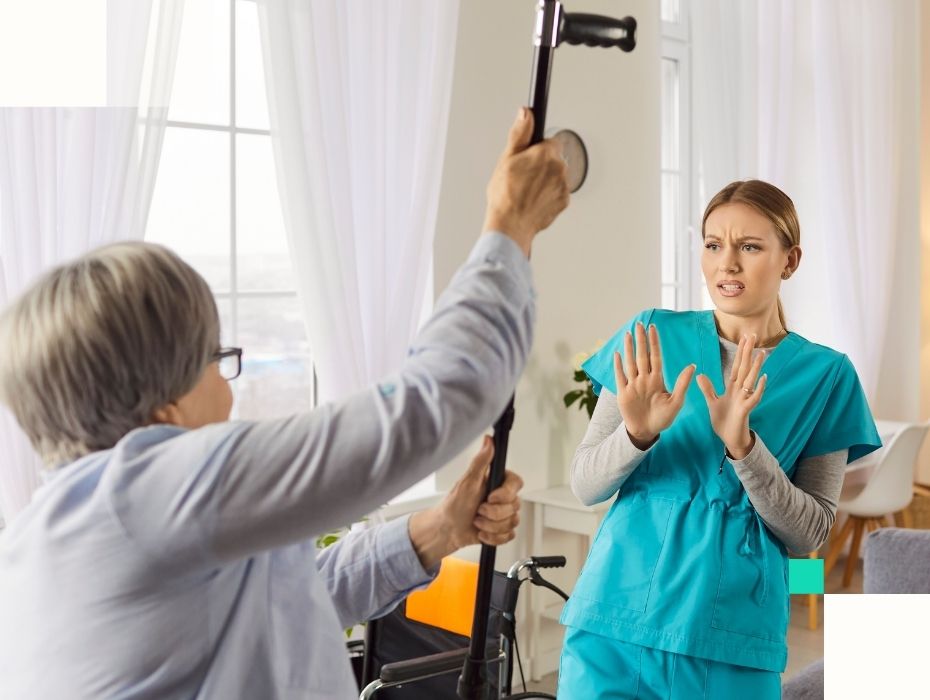
A National Nurses United report highlighted by Security Magazine found that 84.8% of surveyed nurses had experienced some form of workplace violence during the previous year. More than 70% reported verbal assault, while one-third reported being slapped, kicked or punched. Only 35.5% said staff were available at all times to respond to violence.
The numbers are disturbing.
But there is another risk hidden inside them.
When aggression becomes frequent, it can begin to lose its status as an security incident.
The raised voice becomes part of the shift. The threat is dismissed as frustration. The shove is handled locally. The report is postponed because the department is busy and everybody already knows these things happen.
Eventually, security may not be responding slowly because it lacks alarms. It may be responding slowly because the organization has gradually redefined what deserves one.
Security incidents are easier to measure than hesitation
Organizations are generally good at recording visible security incidents.
An alarm was triggered at 2:14 p.m. An officer arrived at 2:18. Police were contacted at 2:21. The incident was closed at 3:06.
These timestamps create the reassuring appearance of precision. But they may omit the important interval.
When was the problem first noticed? How long did somebody spend deciding whether to report it? Was the first message clear? Did it reach the right person? Was there uncertainty over who owned the response?
In July, US Supreme Court justices requested increased funding for personal protection amid what Justice Amy Coney Barrett described as constant threats. The reporting included intimidation, anonymous deliveries and false emergency calls designed to prompt armed law-enforcement responses.
These situations are difficult precisely because the signal is not always self-explanatory.
A delivery is usually a delivery.
A phone call is usually a phone call.
A visitor is usually a visitor.
Security becomes complicated when ordinary activities acquire extraordinary intent.
Designing uncertainty into security procedures
Security will always involve uncertainty. Human environments are too complicated to convert every warning sign into a simple instruction. But uncertainty can be designed around.
Clearer procedures reduce the number of decisions people must invent under pressure. Better training helps them recognize when ordinary behavior has crossed an important threshold. Practiced escalation routes reduce the time spent discovering who owns the problem.
The aim is not a workplace where everyone reacts instantly to everything.
That would be less like security and more like panic with a uniform.
The aim is an organization that can distinguish quickly between the situations that require caution, the situations that require action and the situations that require both.
The security industry has become very good at recording the moment an alarm is triggered.
Its next challenge may be understanding everything that happened just before it, and removing the unnecessary uncertainty that delays what happens next.